
NY DEC Online Meeting on Neurotoxic Insecticides August 27
August 22, 2026
R.I.P. Franklin Kury, Author of Environmental Rights Amendment to the PA Constitution
August 26, 2026
Download this post as a pdf
‘It’s all you can hear’: New Jersey lawsuit takes on datacenter’s noise pollution
Noise Pollution and Data Centers
Health Impacts of Noise Pollution
Community reaction to large industrial equipment (such as power plants and gas compressor stations) sited in rural areas is often negative, due in large part to the production of impactful amounts of low frequency noise (LFN). Data centers and similar facilities, though relatively new, are now known to also produce significant LFN.
Exposure to high levels of noise can have negative health impacts. Chronic exposure to low levels of noise, particularly low frequency noise, can also have severe health impacts. According to this study:
“Noise is a nonspecific stressor that activates the autonomous nervous system and endocrine signaling. According to the noise reaction model introduced by Babisch and colleagues, chronic low levels of noise can cause so-called nonauditory effects, such as disturbances of activity, sleep, and communication, which can trigger a number of emotional responses, including annoyance and subsequent stress. Chronic stress in turn is associated with cardiovascular risk factors, comprising increased blood pressure and dyslipidemia, increased blood viscosity and blood glucose, and activation of blood clotting factors, in animal models and humans. Persistent chronic noise exposure increases the risk of cardiometabolic diseases, including arterial hypertension, coronary artery disease, diabetes mellitus type 2, and stroke.”
Other impacts of noise pollution, of which children and the elderly are most vulnerable, include hearing loss, a reduction in cognitive abilities, poor mental health, and elevated blood pressure. Hearing impacts, including damage to the ear, body-wide internal scarring and much more, can result from excessive low frequency noise.
Data Center Noise
The primary noise issues from data centers are the cooling systems, hosts of chiller fans that generate both broadband noise and low-frequency hum and drone. Data centers run 24/7, so the noise they produce is a constant throughout the year. Diesel generators, often used for backup power, produce high levels of noise when running and must be tested periodically.
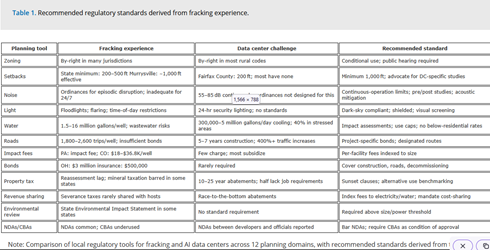
Noise pollution is a concern for communities living near data centers. Data centers emit both low- and high-frequency noise as a result of cooling systems, onsite power generation, diesel generators, and the technical equipment used inside the centers. Diesel generators, in general, even those not powering data centers, are shown to push noise levels above World Health Organization guidelines (~50 decibels). These levels (exceeding ~80 decibels) are associated with sleep disturbance, stress, and cardiovascular risk.
Low frequency noise is a particular concern, as it travels long distances, doesn’t show in dB(A) readings and cannot be effectively attenuated by silencers or barriers. This is the reason dB(C) readings must be used to measure the noise impact of data centers (see below).
How Noise-Sound Levels are Measured
Here’s a general explanation/description of sound scales, a little of the impacts and a separate list of links to do a deeper dive into the subject.
Human hearing range is mostly above 20 Hz (or 20 cycles per second). However, low-frequency noise (20–500 Hz) is an agent of disease that often goes unchecked and unmeasured unless using the appropriate scale. Decibel A scale, dB(A), measures the human hearing range, while Decibel C scale, dB(C), includes measurement of the lower range vibrations. DB(C) should be used to capture the full spectrum of incoming noise and is the correct scale to use when considering the impact of low frequency noise on human health.
Decibels are measured on a logarithmic scale, so an increase of 10 dB causes a doubling of perceived loudness and represents a ten-fold increase in sound level (Crocker, 1997). In other words, if the sound of one vacuum cleaner measures 70 dB, 80 dB would be the equivalent of 10 vacuum cleaners (from https://www.nps.gov › subjects › sound › understandingsound.htm ).
Additional Information
- AI data centers’ “infrasound” pollution linked to nausea, insomnia in nearby residents
- “Infrasound” is often used as a synonym for low frequency sound, but is an imprecise term – see What is Infrasound?
- Charles Morgan describes his plight with low frequency noise from natural gas pipeline compressors
- “At present, infrasound (0–20 Hz) and low-frequency noise (20–500 Hz) (ILFN, 0–500 Hz) are agents of disease that go unchecked. Vibroacoustic disease (VAD) is a whole-body pathology that develops in individuals excessively exposed to ILFN.”
Data Center Ordinance
The Physicians for Social Responsibility PA website has much information on data centers, the health impacts of data centers and quite a good sample ordinance which includes many protective provisions.
From the PSR Data Center Ordinance (specifically for PA):
This zoning ordinance regulates the where and how data centers are allowed to operate:
- Restrict where data centers are permitted (e.g., away from residential zones)
- Require strict review processes, public hearings, and environmental assessments
- Mandate clean energy use and limit water consumption
- Require community benefits agreements and enforceable conditions
The ordinance has this:
NOISE LEVEL: The maximum sound pressure level measured in both A-weighted decibels (dBA) and C-weighted decibels (dBC) at the property line. The use of dBC accounts for low-frequency sound components, such as those generated by ventilation fans, cooling units, and similar equipment, which may add 10–20 decibels of additional perceptible noise beyond the A-weighted measurement.
NOTE: the ordinance needs a prohibition of non-disclosure agreements (NDAs) between or among developers and municipal authorities.
On that same page is a more general sample Environmental Nuisance Ordinance.