DCS is Jazzed! Jonny King Trio in Concert Saturday, Oct. 3
August 14, 2026
Low Frequency Noise from Data Centers Can Harm Your Health
August 23, 2026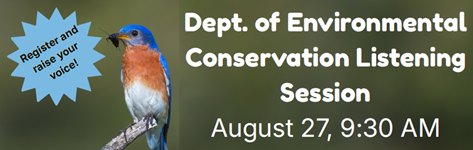
Download the flyer for this “Listening Session” as a pdf
Download more information, from Dan Raichel at NRDC and the American Bird Conservancy, as a pdf
What is Happening
We need New Yorkers and engaged advocates to register and voice their support for strong regulations that give the BBPA the teeth it needs.
What to Do
Registration is free and required. To attend, a registration link is available at
This is your chance to comment. If you would like to speak, you may indicate that on the registration form. Note: Speaking time is limited; each person will get between 1-3 minutes. Practice your remarks ahead of time using a timer.
What to Say
Neonics are highly destructive neurotoxic insecticides. They are used in ways that pollute soil and water, kill beneficial insects, harm birds and wildlife, and do not benefit farmers.
We need the DEC to enact regulations that:
- Ensure most non-agricultural turf and ornamental uses are prohibited
- Create narrow exemptions for neonic use to protect specific woody plants,not turf, or address environmental emergencies
- Limit neonic use on corn, soy, and wheat seeds to situations where neonic seed coating use is verified as needed, and would address an economically significant pest risk
Links to Fact Sheets
Neonic Use in New York
**Agriculture and lawn/garden/ornamental uses make up 80-90% of the neonics entering New Yorkʼs environment every year.
**Neonics are typically used preventively, regardless of whether a pest problem is present or not. For this reason, most use is unnecessary.
**Neonic seed treatments are likely used on over 1 million acres of New York corn, soybean, and wheat fields each year, making them the top source of contamination.
**Research consistently shows that these seed treatments do not economically benefit the farmers that use them—including recent extensive testing by Cornell University.
**Non-agricultural lawn and garden neonic uses can heavily contaminate urban and suburban areas, but provide no benefit to homeowners or are easily replaced with safer alternatives.
Questions? Contact Hardy Kern
ehardykern@abcbirds.org or 202-750-1412
Fact sheets & language developed by American Bird Conservancy, Natural Resources Defense Council, & Xerces Society for Invertebrate Conservation